
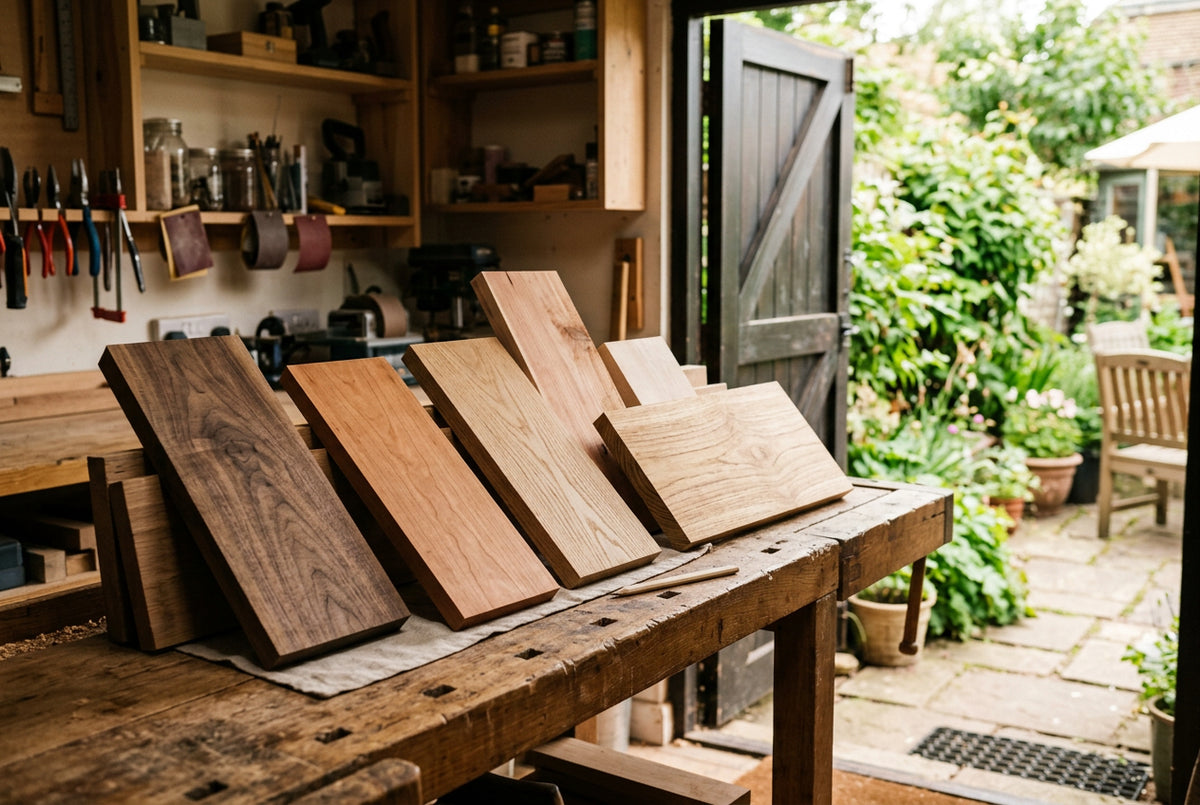
The best wood for a DIY project is not always the most expensive board or the one with the most attractive grain. It is the material that suits the design, the environment, and the way the finished piece will be used.
Before comparing species, decide what your project needs to withstand. An indoor display shelf and an uncovered garden bench face very different conditions. Use this guide to narrow your choices before purchasing lumber.
Start with where the project will live
For indoor projects, consider wear, appearance, stability, and the demands of the design. A painted storage cabinet may call for different materials than a clear-finished tabletop. Even indoors, seasonal humidity changes affect solid wood, so the construction must allow for relevant movement.
For outdoor projects, ask more specific questions: Will rain reach the piece? Can water drain away? Will it touch soil? Will it sit under a roof or in full exposure? A covered porch is not the same environment as an uncovered garden, and neither is automatically dry.
Do not rely on an exterior finish to make unsuitable material durable. Wood selection, construction details, hardware compatibility, and maintenance all contribute to performance.
Hardwood and softwood are not performance ratings
The terms hardwood and softwood describe botanical groups, not a simple ranking of strength or durability. Individual species vary considerably. A hardwood label does not guarantee that a board is appropriate outdoors, and a softwood label does not rule out a useful furniture material.
Instead, compare the characteristics relevant to your project: resistance to dents, workability, weight, natural decay resistance where applicable, and availability in the sizes your design requires. Confirm the species rather than relying on a broad sales label.
Compare familiar choices by their intended use
Pine is often considered for painted indoor projects and rustic designs. Its tendency to dent and the presence of knots may matter for surfaces that receive frequent wear. Examine the actual boards and match their grade and condition to the work.
Oak is often selected for visible grain and furniture, but different oak species do not have identical properties. Do not treat a board labeled simply oak as a confirmed outdoor choice. Ask the supplier for a precise identification and suitability information.
Cedar is frequently considered for exterior projects, but species, the proportion of heartwood and sapwood, design, and exposure still matter. Natural durability is not a promise that an outdoor piece will need no care.
These are starting points, not interchangeable material specifications. If your plans identify a particular material, understand the implications before substituting something else.
Check whether sheet goods fit the design
Plywood and other panels can be useful for cabinets, shelving, and built-ins, but different products have different limits. Check the manufacturer's grade, intended application, span guidance, and exposure requirements.
Do not assume that a panel described as exterior-bonded can remain exposed to weather without protection. Likewise, do not substitute an indoor panel for an outdoor application based on appearance alone. Edges, fasteners, coatings, and support details are part of the decision.
Inspect the board, not just the species
Look along each board for bow, cup, twist, splits, and other defects. Consider where individual parts will come from and how much material preparation will be needed to reach the required dimensions.
A cheaper rough board may not be cheaper overall if it requires equipment you do not have or leaves little usable stock. Verify actual thickness and width, and allow for trimming, saw kerf, and preparation rather than buying only the final part dimensions.
For structural or load-bearing applications, appearance is not a substitute for the appropriate grade, design, or professional guidance.
Consider moisture before cutting parts
Wood exchanges moisture with its surroundings. Material that is not appropriate for the intended environment can change dimension after assembly. There is no single waiting period that makes every board ready to use.
Store material appropriately and assess its moisture condition for the project. When using a moisture meter, follow its instructions, including any species or temperature adjustments. Storage time alone does not prove readiness, and a finish does not stop all moisture exchange.
Give treated and reclaimed wood extra scrutiny
For treated wood, follow the treatment label and supplier guidance for permitted applications, handling, and compatible fasteners. Do not assume all treated lumber is suitable for the same uses.
For reclaimed wood, investigate its history and condition. Unknown coatings, embedded metal, deterioration, or contamination can make an otherwise attractive board unsuitable. If you cannot establish that it is appropriate for your use and preparation methods, select another material.
Budget for the finished project
Compare more than the price per board. Include usable yield, machining needs, suitable hardware, finishing supplies, and maintenance. Also ask whether replacement stock will be easy to find if the design changes or a part needs to be remade.
Before buying, write down the exact material specification and actual dimensions. That small step helps avoid purchasing a look-alike product that does not meet the design's requirements.
A practical way to make the final choice
Choose the material that meets the project's requirements first, then compare appearance and cost among suitable options. If you cannot explain why a wood or panel is appropriate, pause and ask the supplier or an experienced professional before cutting it.
When selecting a project from our woodworking plans collection, read the material requirements and experience level before buying supplies. Start with a compatible design and material, rather than trying to force an available board into the wrong job.
Share:
How to Plan a Woodworking Project Before You Cut
What It Means to Order from a Small Woodworking Shop